





Goodmayes Hospital


Ilford. England
2026


Delivering Net Zero Healthcare at Goodmayes Hospital with Panasonic Air Source Heat Pumps
Challenge
The redevelopment of Goodmayes Hospital stands as a compelling example of how innovative low-carbon technologies can enable the decarbonisation of complex healthcare estates. Once a derelict Victorian building that had remained unused for decades, the hospital presented an extraordinary challenge for designers, engineers, and healthcare stakeholders alike. The ambition was not simply to restore a historic building, but to transform it into a modern NHS healthcare facility capable of meeting its long-term sustainability and net zero objectives.
Solutions & applied technology
At the centre of this transformation was Panasonic Heating & Cooling, whose Air Source Heat Pump (ASHP) technology provided the foundation for a fully electric heating strategy. Working in collaboration with North East London Foundation Trust (NELFT), M&E consultants Donabie Associates, and heating systems specialist DiscreteHeat, Panasonic helped deliver a solution that balanced heritage preservation, energy efficiency, operational performance, and patient wellbeing.
The result is a landmark healthcare retrofit that demonstrates how even the most challenging historic buildings can be successfully adapted for a low-carbon future.
Compounding the challenge was the absence of a viable gas infrastructure. Without access to traditional fossil-fuel heating systems, the project required an alternative solution capable of delivering reliable, NHS-grade heating performance entirely through low-carbon technologies.
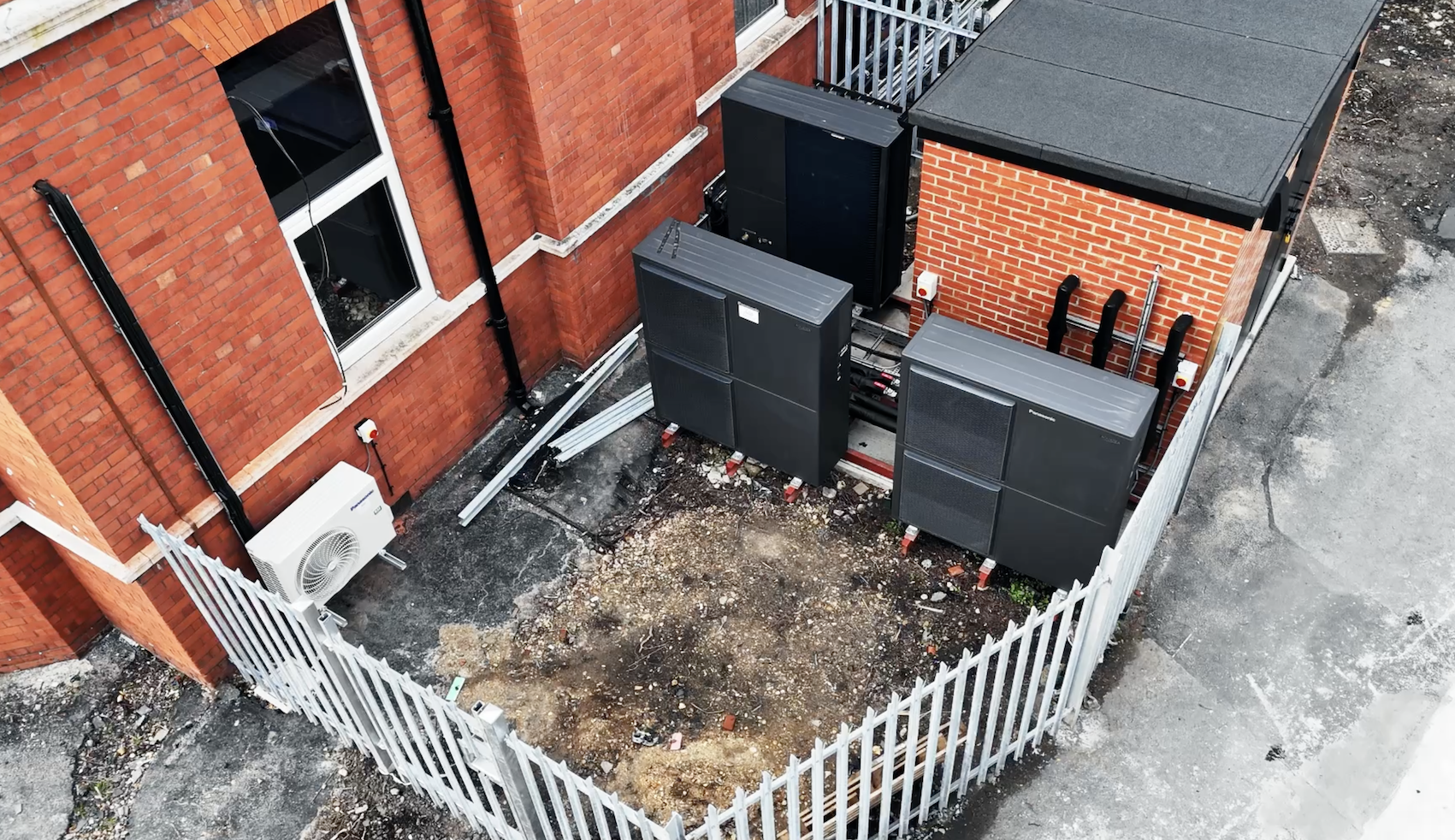
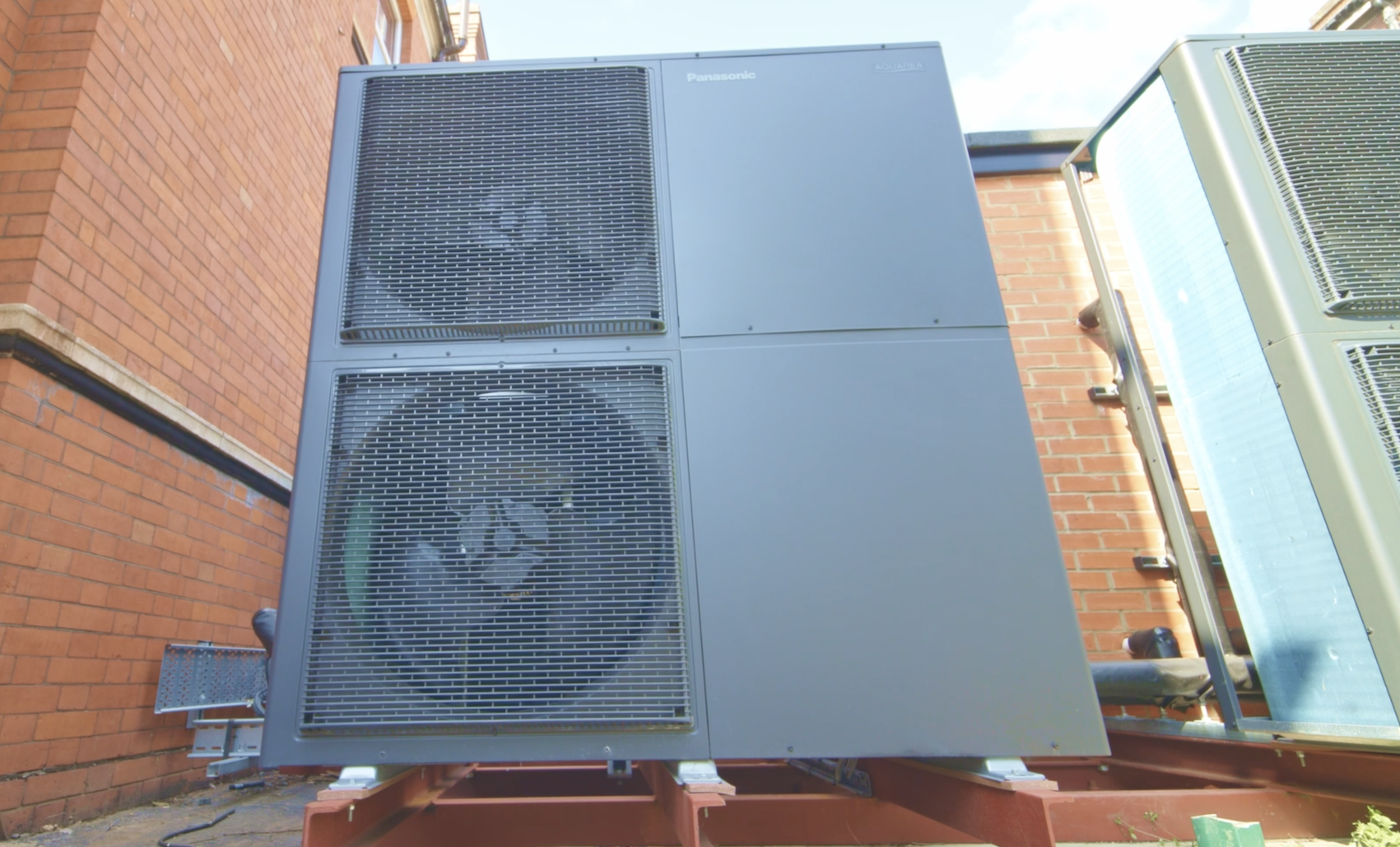
To address these challenges, Panasonic Heating & Cooling supplied a cascade system comprising three 30kW Aquarea M Series T-CAP Air Source Heat Pumps.
T‑CAP (Total Capacity) technology is Panasonic’s advanced heat pump technology designed to maintain full heating output even in very cold outdoor conditions. Unlike conventional heat pumps, which typically lose capacity as temperatures drop, T‑CAP systems use enhanced compressor and refrigerant injection technology to deliver reliable performance and maintain rated heating capacity at low temperatures, reducing or eliminating the need for backup electric heating.
Together, the units provide a total heating capacity of 60kW, with a third unit installed for back up/ reserve for when any maintenance is required on the units, ensuring that the building still has 100% of the heat load required, delivering a fully electric, renewable-based heat source that removes the need for fossil fuel consumption while maintaining the reliability expected in a healthcare environment.
The Panasonic solution was selected for its ability to operate efficiently at low water temperatures, making it ideally suited to modern heat distribution systems while maintaining excellent seasonal performance. The cascade configuration also provides built-in resilience, ensuring continuity of service and flexibility in operation.
- Deliver consistent low-temperature heating throughout the facility.
- Maximise energy efficiency and renewable performance.
- Provide zoned heating control across different wards and functional areas.
- Support future sustainability and decarbonisation objectives.
Working closely with Donabie Associates, Panasonic's heat pump technology became the cornerstone of a comprehensive heating strategy that aligned operational performance with environmental responsibility.
While the selection of the heat source was critical, the success of the project depended equally on identifying a suitable heat distribution system. Any heating solution needed to operate effectively at the lower flow temperatures associated with heat pump technology.
Several conventional approaches were assessed but ultimately ruled out. Ceiling-mounted radiant panels presented difficulties, particularly because installation would have required intrusive alterations to protected ceilings and original plasterwork.
Underfloor heating was also unsuitable because extensive intervention in the building fabric would have been required, conflicting with both structural and heritage preservation objectives.
To overcome these limitations, the project team selected the ThermaSkirt EasyClean LST system from DiscreteHeat.
Installed at skirting-board level, ThermaSkirt combines heat distribution with the architectural function of traditional skirting. This innovative approach delivered several important advantages:
- Excellent compatibility with low-temperature heat pump operation.
- Minimal visual impact within the historic interiors.
- Elimination of dust-trapping grilles and inaccessible cavities.
- Reduced need for disruptive structural interventions.
The completed installation brought together Panasonic's renewable heating technology with DiscreteHeat's advanced emitter system to create a fully integrated low-carbon heating solution.
An additional benefit of the ThermaSkirt EasyClean system is its naturally anti-ligature profile. Mental health and healthcare facilities often require careful consideration of potential ligature risks, and conventional heating systems can create challenges in this regard due to their exposed brackets, pipework, and radiator designs.
By integrating the heating system into the skirting board itself, ThermaSkirt significantly reduces potential ligature points without the need for additional protective covers or specialist modifications. This unobtrusive approach enabled the project team to support safeguarding requirements while maintaining a clean aesthetic that complemented the historic character of the building.
The pairing of low-temperature emitters with Panasonic's high-efficiency heat pumps ensures optimal system performance throughout the year. This approach helps reduce energy consumption, lower operational costs, and maximise renewable heating benefits.
Green Impact of the project
The transformation of Goodmayes Hospital illustrates what can be achieved when innovative engineering solutions are combined with a clear vision for sustainability.
By pairing advanced heat pump technology with carefully selected low-temperature emitters and intelligent controls, the redevelopment delivers a model for future healthcare retrofits across the UK.
For healthcare providers seeking to modernise estate infrastructure while advancing sustainability objectives, Goodmayes Hospital provides a powerful blueprint for the future of low-carbon healthcare.
Partner
DiscreteHeat, Donabie Associates & North East London Foundation Trust (NELFT)
