







Latest News
- Panasonic marks 15 years of CO₂ refrigeration as EU Regulations tighten the net on high-GWP gases 28/07/2026 Panasonic’s 15-year commitment to CO₂ places it at the forefront of a market now accelerating to... Read more
- Panasonic Heating & Cooling UK Earns Great Place To Work Certification™ for a 3rd Year 22/07/2026 Panasonic Heating & Cooling UK Earns Great Place To Work Certification™ for a 3rd Year Read more
- Europe’s heat pump market returns to growth, shielding millions of homes from volatile energy prices 30/06/2026 Europe’s heat pump market returns to growth, shielding millions of homes from volatile energy pric... Read more
- Panasonic champions ‘Cool Intelligence’ as it supports World Refrigeration Day 2026 22/06/2026 Panasonic is pleased to announce its continued support and sponsorship of World Refrigeration Day (W... Read more
- Panasonic Showcases Next-Generation HVAC Innovation 28/05/2026 Panasonic Showcases Next-Generation HVAC Innovation at Exclusive Partner Events in London and Manche... Read more
- Replay Golf Enhances Customer Experience with Panasonic PACi NX Solutions 13/05/2026 Replay Golf, a specialist retailer of pre owned and new golf equipment, has upgraded comfort, air qu... Read more
- More Panasonic News
Panasonic marks 15 years of CO₂ refrigeration as EU Regulations tighten the net on high-GWP gases
28/07/2026
From 2027, the EU's revised F-Gas Regulation cuts the amount of virgin HFC refrigerant permitted onto the market from 42.9 million tonnes CO₂-equivalent to 21.7 million tonnes, almost halving supply (Regulation (EU) 2024/573, Annex VI[1]). For organisations such as retailers, food service operators, cold chain logistics firms, pharmaceutical and healthcare cold storage providers, and hospitality businesses still running high-GWP systems, this increases the pressure to secure alternatives before availability tightens and prices climb further.
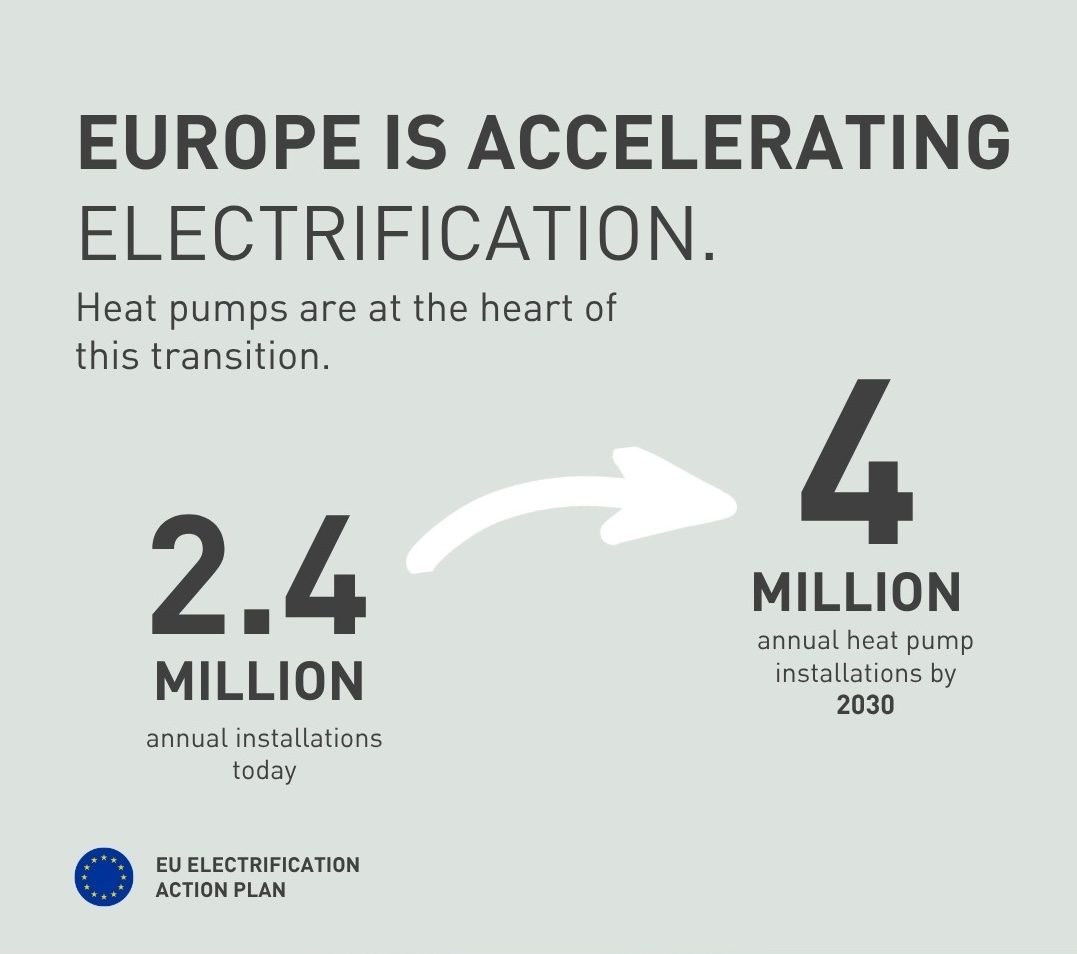
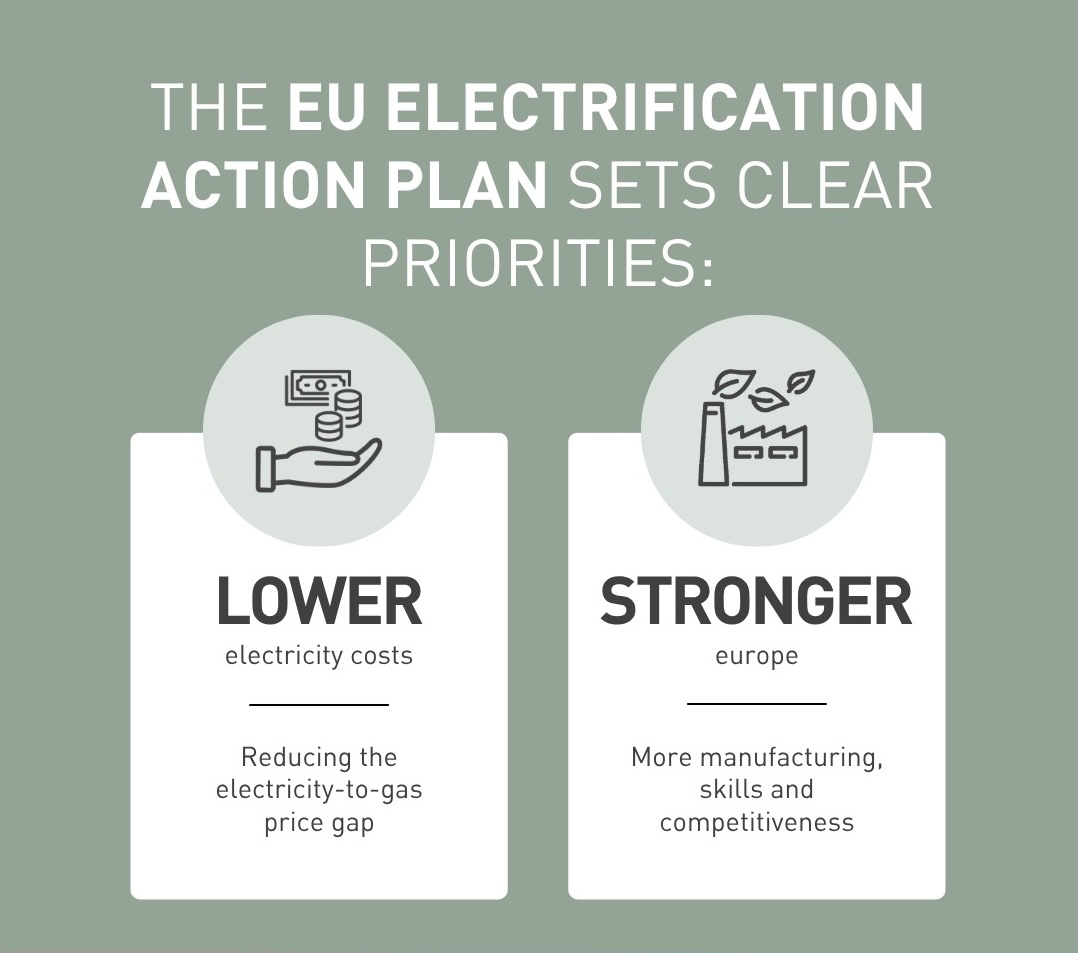
That pressure was reinforced on 17 July 2026, when the European Commission published its Electrification Action Plan[2], setting an indicative target of 46% electrification of final energy consumption by 2040 and committing to a dedicated EU Cooling and Heating Action Plan (COM(2026) 595 final). For the refrigeration sector, the shift away from high-GWP gases is not an isolated F-Gas deadline, but one part of a much broader, structural move towards electrified, low-carbon heating, cooling and refrigeration units across Europe.
Panasonic has been building towards this moment since 2009, when it began manufacturing CO₂ refrigeration condensing units in Japan. The company now marks 15 years of innovation in CO₂ refrigeration, a milestone that sits within its broader 65-year history in cold chain technology. This sits alongside Panasonic’s wider experience in developing and producing its own CO₂ compressors, a capability that dates back to 2001 and further reinforces the depth of its technical expertise in natural refrigerant technology.
This long-term commitment reflects decades of engineering expertise and supported by measurable performance data, not a response to recent regulatory change.
“We didn't start developing CO₂ systems because a deadline forced our hand. We started because we could see where the industry needed to go, long before regulation caught up,” said Enrique Vilamitjana, Managing Director of Panasonic Heating & Air Conditioning Europe. “That 15-year head-start is now the difference between retailers who are scrambling to find a replacement refrigerant and those who already have a proven one installed.”
The Measurable Impact of CO₂ Refrigeration
According to performance data supplied by Panasonic research in Japan, CO₂ systems were found to cut freezer energy consumption by 25.4% and refrigeration energy consumption by 16.2% against R404A inverter units, the refrigerant that was the industry standard at the time the research was carried out. R404A has since been banned from use in new EU equipment since 2020, which only strengthens the case for CO₂ against the benchmark it was originally measured against. Total CO₂ emissions, combining refrigerant leakage and energy use, were down 67%[3].
The comparison against R404A is particularly significant because R404A was historically regarded as one of the stronger-performing refrigerants for cold chain application[4]. As many current lower-GWP HFC/HFO replacement blends involving thermodynamic trade-offs that can affect efficiency, the Panasonic’s research suggests the potential energy-saving benefits of CO₂ could be event higher in some applications than the original R404A benchmark indicates.
That combination of proven performance among all climates in Europe and a supply chain under increasing regulatory pressure, is why the timing of this milestone matters. As the sector gathers at Chillventa 2026 in Germany this October, the conversation among industry leaders, retailers, specifiers and the wider cold chain supply base will move from whether to plan a natural refrigerant transition to how quickly it can be done.
A proven example of Panasonic’s 20HP cold chain solution using the natural refrigerant R744 (CO₂) is Dunstaple Farm Ltd near Holsworthy, Devon, home to the award-winning Farmer Tom’s Ice Cream. The project showcases how Panasonic technology can deliver efficient, sustainable refrigeration for food production. Read the full case study here.
A refrigerant older than the industry realises
CO₂ may be widely regarded as the future of low-carbon refrigeration, but its history stretches back much further. Long before synthetic refrigerants entered the market, R744 was a mainstay of commercial, industrial and marine refrigeration, widely used from the late nineteenth century through to the 1920s.
According to ASHRAE's historical account, CO₂ fell out of favour during the 1930s, because newly developed synthetic refrigerants such as R-12 were perceived as easier to handle and operated at lower pressures. As a result, many applications shifted away from CO₂ despite its long track record in commercial and marine refrigeration.[5]
Advances in compressor technology, intelligent controls and system design have made CO₂ a practical solution for modern cold chain applications. As a natural refrigerant with a Global Warming Potential (GWP) of just 1, CO₂ (R744) offers a climate-friendly alternative to conventional HFC and HFO synthetic refrigerants, enabling Panasonic to deliver sustainable refrigeration solutions at scale.
The Evolution of Panasonic's Cold Chain Business
Panasonic's cold chain business traces back to 1960, when the company launched its first ice cream stocker in Japan. Two years later, in 1962, it began production of its first condensing units, the technology base for everything that followed. That puts the business at approximately 65 years old, with condensing unit manufacturing itself now in its 64th year.
PHVACEU entered the European CO₂ refrigeration market in 2017 as part of Panasonic's long-term commitment to sustainable refrigeration. Launching with a single 2HP ML/LT condensing unit, the company established a foundation for growth in the emerging natural refrigerant market. Since then, Panasonic has steadily expanded its CO₂ portfolio, which today offers a comprehensive range of solutions for the small capacity refrigeration segment across multiple applications.
Panasonic continues to offer products manufactured in Japan while, at the same time, expanding its European manufacturing capabilities through Panasonic Cold Chain Poland (PCCPL) in Wroclaw. Through continuous development of the business across Europe, the portfolio now benefits from products supplied from both locations.
The Measurable Impact of CO₂ Refrigeration
Research conducted by Panasonic in Japan found CO₂ systems cut freezer energy consumption by 25.4% and refrigeration energy consumption by 16.2% against R404A inverter units, the refrigerant that was the industry standard at the time the research was carried out. R404A has since been banned from use in new EU equipment since 2020, which only strengthens the case for CO₂ against the benchmark it was originally measured against. Total CO₂ emissions, combining refrigerant leakage and energy use, were down 67%[6].
The comparison against R404A is particularly significant because R404A was historically regarded as one of the stronger-performing refrigerants for cold chain applications. As many current lower-GWP HFC/HFO replacement blends involving thermodynamic trade-offs that can affect efficiency, the Panasonic’s research suggests the potential energy-saving benefits of CO₂ could be event higher in some applications than the original R404A benchmark indicates.
That combination of proven performance among all climates in Europe and a supply chain under increasing regulatory pressure, is why the timing of this milestone matters. As the sector gathers at Chillventa 2026 in Germany this October, the conversation among industry leaders, retailers, specifiers and the wider cold chain supply base will move from whether to plan a natural refrigerant transition to how quickly it can be done.
A proven example of Panasonic’s 20HP cold chain solution using the natural refrigerant R744 (CO₂) is Dunstaple Farm Ltd near Holsworthy, Devon, home to the award-winning Farmer Tom’s Ice Cream. The project showcases how Panasonic technology can deliver efficient, sustainable refrigeration for food production. Read the full case study here.
A commitment to CO₂ long before natural refrigerants returned to the spotlight
While CO₂ has become a focal point of the refrigeration industry's transition to lower-GWP refrigerants, Panasonic's commitment to the technology predates the current regulatory landscape by many years. The company's 15-year CO₂ milestone reflects sustained investment in natural refrigerants long before they became an industry priority, building the experience and technical expertise that underpin its cold chain business today.
The milestone provides Panasonic a different story to tell than competitors now pivoting to natural refrigerants in response to regulation. Sixty-five years after its first ice cream stocker, and with a refrigerant whose own history stretches back further still, the company's position is that the most future-proof technology in cold chain right now is also one of its oldest.
[1] https://eur-lex.europa.eu/eli/reg/2024/573/oj/eng
[2] https://energy.ec.europa.eu/publications/communication-electrification-action-plan-com2026595_en
[4] https://climate.ec.europa.eu/eu-action/fluorinated-greenhouse-gases/climate-friendly-alternatives-hfcs_en


